



When you visit the dentist, you may expect your appointment to include a visual examination of your teeth and gums. But sometimes, there’s more happening beneath the surface than your dentist can see during a regular exam. That’s where dental X-rays come in.
Dental X-rays are an important diagnostic tool that can give your dental team a more complete picture of your oral health. By revealing areas that aren’t visible during a visual examination, X-rays can help your dentist identify potential concerns and develop a more personalized approach to your care.
What Are Dental X-Rays?
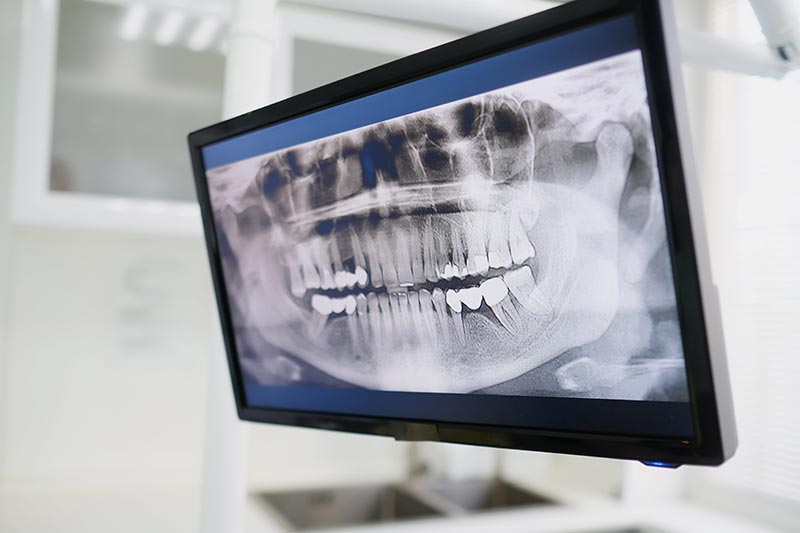 Dental X-rays use a small amount of radiation to create images of the structures inside your mouth. Depending on the type of X-ray taken, these images can show individual teeth, the roots of your teeth, your jawbone, and other surrounding structures.
Different types of dental X-rays provide different views. Your dentist may recommend a particular type depending on your age, oral health, symptoms, dental history, and the information they’re looking for.
Modern dental offices often use digital X-rays, which can provide detailed images that your dental team can view on a computer or screen. Digital imaging can also make it easier for your dentist to review and explain what they’re seeing with you.
What Can Dental X-Rays Detect?
One of the biggest benefits of dental X-rays is that they can reveal problems that may not be visible during a regular dental exam.
For example, X-rays may help your dentist identify:
- Cavities between teeth: Decay can sometimes develop in areas that are difficult to see during a visual examination.
- Changes around tooth roots: X-rays can help your dentist evaluate the roots and surrounding bone.
- Bone loss: Certain patterns of bone loss may be associated with gum disease.
- Impacted teeth: X-rays can show teeth that haven’t erupted properly or are positioned beneath the gums.
- Dental infections: Certain infections or changes around the root of a tooth may be visible on an X-ray.
- Problems beneath existing dental work: X-rays can sometimes provide information about areas underneath fillings, crowns, and other restorations.
This additional information can be particularly helpful when you’re experiencing symptoms, but the cause isn’t immediately apparent during a visual examination.
Why Can’t My Dentist Just Look at My Teeth?
A visual examination is an essential part of every dental evaluation, but it has limitations. Your dentist can see the surfaces of your teeth and examine your gums, but they can’t see everything happening underneath or between your teeth.
Think of an X-ray as another piece of the puzzle. Rather than relying on a single source of information, your dentist can combine X-ray images with your dental history, symptoms, visual examination, and other diagnostic tools to better understand your oral health.
This can help your dentist detect potential problems earlier and make more informed decisions about your care.
Do I Need Dental X-Rays at Every Visit?
Not necessarily. Dental X-rays aren’t automatically needed at every appointment.
Your dentist determines when X-rays are appropriate based on your individual circumstances. Factors such as your age, oral health, risk of developing dental disease, symptoms, previous dental treatment, and time since your last X-rays may all be considered.
If you have a new dental concern, your dentist may also recommend an X-ray to help determine what’s causing your symptoms.
The goal is to obtain the diagnostic information that’s appropriate for your situation while avoiding unnecessary imaging.
Are Dental X-Rays Safe?
Dental X-rays involve exposure to a relatively small amount of radiation. Dental professionals follow established safety practices and use appropriate techniques and equipment to minimize exposure while obtaining the images needed for diagnosis.
If you’re pregnant or think you may be pregnant, let your dental team know before having X-rays taken. Your dentist can consider your individual circumstances and determine whether imaging should be performed.
X-Rays Help Your Dentist Understand Your Smile
Your smile is more than what can be seen in the mirror. Your teeth have roots beneath the gums, your jaw contains supporting bone, and some dental problems can develop in places that aren’t easily visible.
Dental X-rays can give your dentist valuable information about these structures and help complete the picture of your oral health. Combined with regular examinations and professional cleanings, diagnostic imaging can play an important role in preventive and comprehensive dental care.
At Lyon Dental, we take the time to understand your individual dental needs and use appropriate diagnostic tools to help evaluate your oral health. If X-rays are recommended during your appointment, we’re happy to explain what we’re looking for and why the images may be helpful for your care.
Have questions about dental X-rays or your oral health? Contact Lyon Dental to schedule an appointment and learn more about our approach to personalized dental care.


